

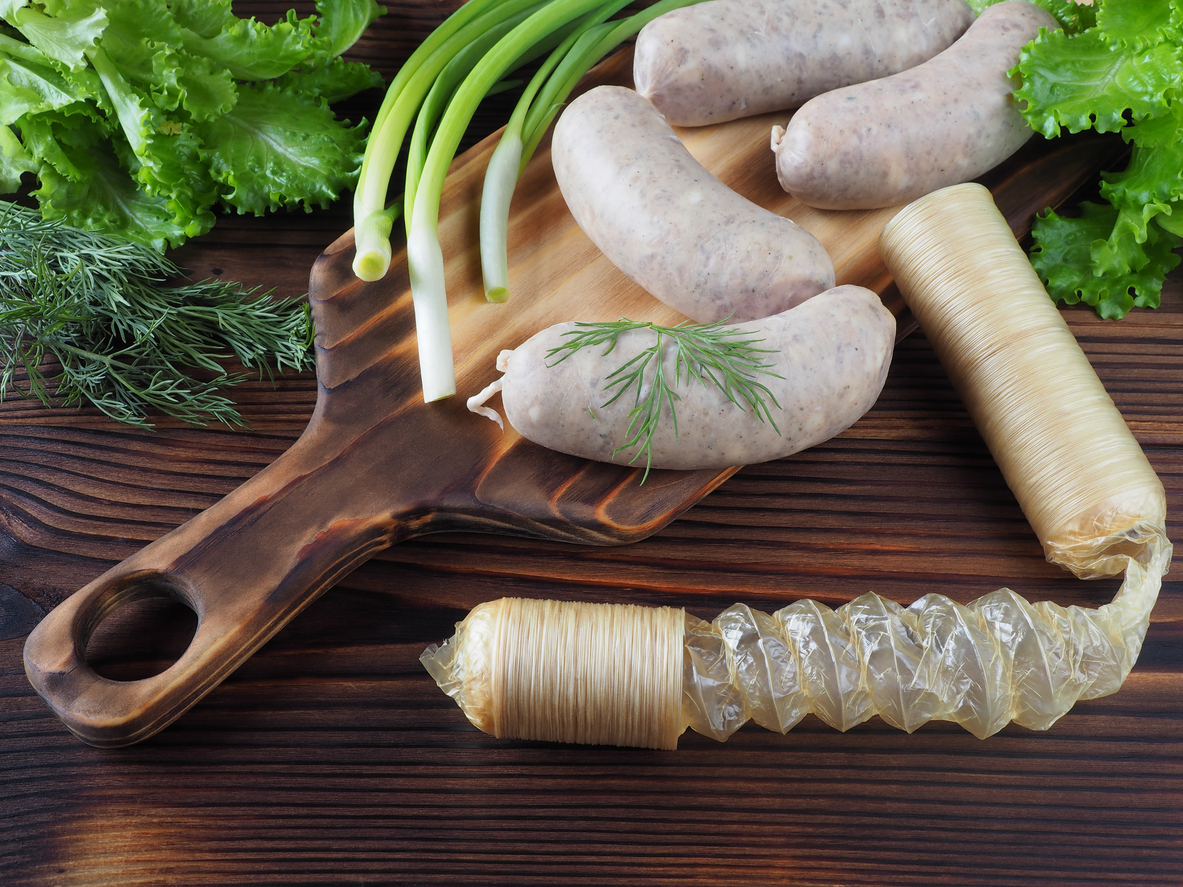
Natural vs. Collagen Sausage Casings: Which Is Better for My Products?
Natural sausage casings are often preferred for their traditional texture, flexibility, and distinctive bite, while collagen casings are commonly chosen for consistent sizing, convenient handling, and efficient production. Both options can work well for different sausage products, but the better choice depends on your processing equipment, desired appearance, production volume, and finished product requirements.
For small and medium-sized meat processors, selecting the right casing can affect everything from stuffing efficiency to customer satisfaction. Understanding how natural and collagen casings differ can help you choose a product that supports your processing methods and the type of sausage you’re producing.
- TL;DR
- Natural casings provide a traditional appearance and bite, with some variation in diameter and texture.
- Collagen casings offer more uniform sizing and can simplify certain stuffing and portioning processes.
- The best casing depends on sausage type, equipment compatibility, production needs, and desired finished results.
What Are Natural Sausage Casings?
What Are Collagen Sausage Casings?
Which Casing Produces a Better Sausage Texture?
Are Collagen Casings Easier to Use in Commercial Production?
Which Casings Work Best for Bratwurst and Breakfast Sausage?
Smaller-diameter natural sheep casings are often selected for breakfast links and similar products. Collagen casings may also be appropriate for certain bratwurst and breakfast sausage applications, particularly when consistent sizing is a priority. The final selection should account for sausage diameter, cooking method, and whether the casing is intended to be edible. We can help processors review available casing categories when selecting supplies for different sausage products.
How Do Casing Costs and Production Efficiency Compare?
Choosing the Right Casings
Choosing between natural and collagen sausage casings depends on your product, processing methods, and production goals. At Mar/Co Sales, we help meat processors understand the differences in texture, consistency, handling, and efficiency. Explore the benefits of each casing type to find the right fit for your sausage production needs.
Find the Right Sausage
Casings at Mar/Co Sales
Whether you’re producing traditional bratwurst, breakfast links, or specialty sausage products, Mar/Co Sales can help you explore natural and collagen casing options. We work with meat processors across the country and understand the importance of choosing supplies that fit your production methods. Contact Mar/Co Sales to discuss your sausage casing needs and learn more about our available products.
Frequently Asked Questions
Choosing the right sausage casing is essential for consistent results during processing. At Mar/Co Sales, we help customers understand casing types, preparation requirements, and suitable applications. Our FAQs address common questions about collagen and natural casings to help you select the best option for your sausage products.
Some collagen casings are edible, while others are designed to be removed. Always verify the intended application and manufacturer's instructions before selecting a casing.
Many salt-packed natural casings require rinsing and soaking before use. Preparation requirements depend on how the casings are supplied, so follow the product's specific instructions.
Not necessarily. Casings are designed for different processing conditions, and some may not tolerate the heat, moisture, or handling involved in smoking. Choose a casing rated for the intended application.
